
Jul
News
Chemical purity grades explained: AR, ACS, HPLC, LC-MS and technical grade
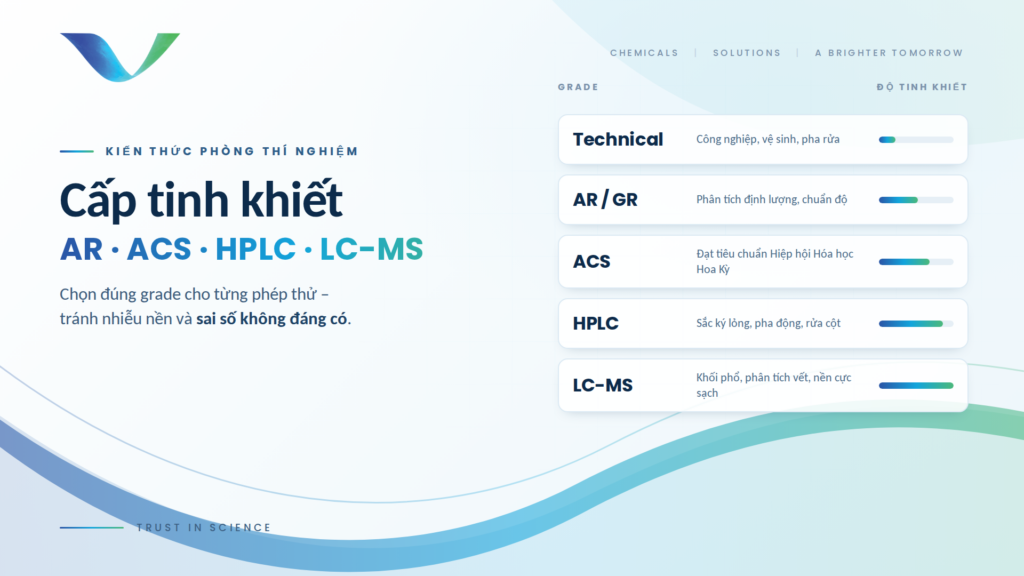
Technical, AR/Reagent, ACS, HPLC and LC-MS grade explained: what each grade controls and how to pick the right one for the test you are running.
The same chemical name can cover several different purity grades. Choosing the wrong grade can skew analytical results, raise baseline noise, shorten instrument life, or simply waste budget when a grade far above what the application needs is used.
Technical grade
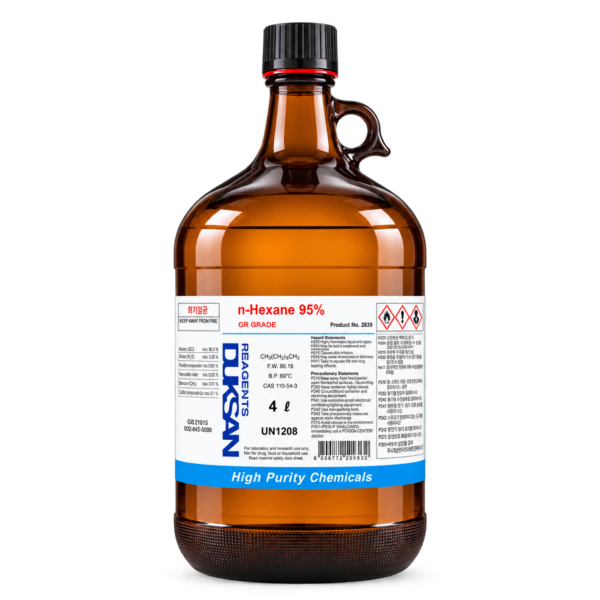
Technical grade is generally used for industrial purposes, pilot production, cleaning and other applications where impurities do not need tight control. It should not be used directly for quantitative analysis when the method calls for high purity.
AR / reagent grade
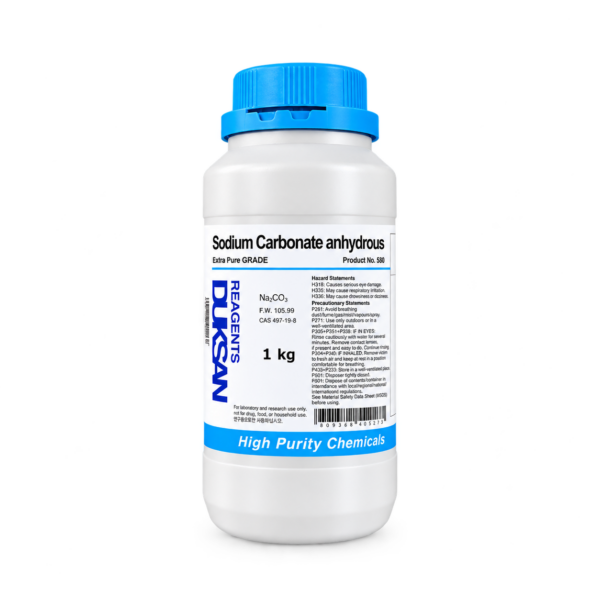
AR or reagent grade suits many routine laboratory reactions and tests. Chemicals at this grade usually carry an assay value and limits on a few principal impurities, but they are not necessarily suitable for sensitive chromatographic techniques.
ACS grade
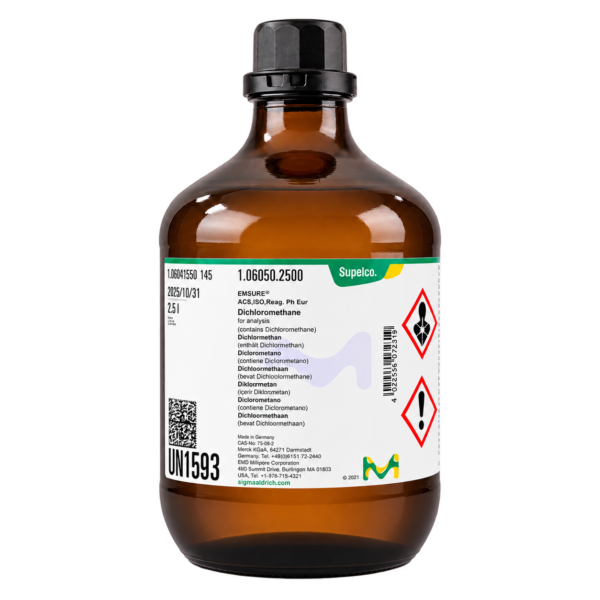
ACS grade is manufactured to meet the specifications of the American Chemical Society for a range of analytical applications. When a laboratory needs a more consistent quality level than reagent grade provides, ACS grade is usually worth considering.
HPLC grade
HPLC grade is controlled specifically for liquid chromatography. Solvents at this grade typically carry lower levels of UV-absorbing impurities and non-volatile residue, which gives a more stable baseline and reduces the risk of spurious peaks.
LC-MS grade
LC-MS grade suits methods that require high sensitivity and mass-spectrometric detection. This grade requires tight control of impurities that cause ion interference, of non-volatile salts, and of matrix compounds that can suppress signal.
Choosing quickly
- Synthesis, cleaning, pilot production: consider technical or reagent grade according to requirements.
- Routine wet chemistry: reagent / AR / ACS grade.
- HPLC-UV: HPLC grade preferred.
- LC-MS/MS: LC-MS grade, with MS-compatible additives.
- Quantitative calibration: use a CRM or a reference standard with a clear COA.
QEMIX recommends: do not go by the chemical name alone. Check the grade, the assay, the critical impurities, the COA and SDS, the pack size and the requirements of your method before placing an order.
References
- PubChem LCSS: pubchem.ncbi.nlm.nih.gov/docs/lcss
- OSHA Chemical Hazards: osha.gov/chemical-hazards
Send the product name with its CAS Number, grade and pack size. QEMIX helps you look up the Specification and SDS, and supplies the COA for the exact Lot No. once the batch is confirmed.
See the brands QEMIX distributes