
Sep
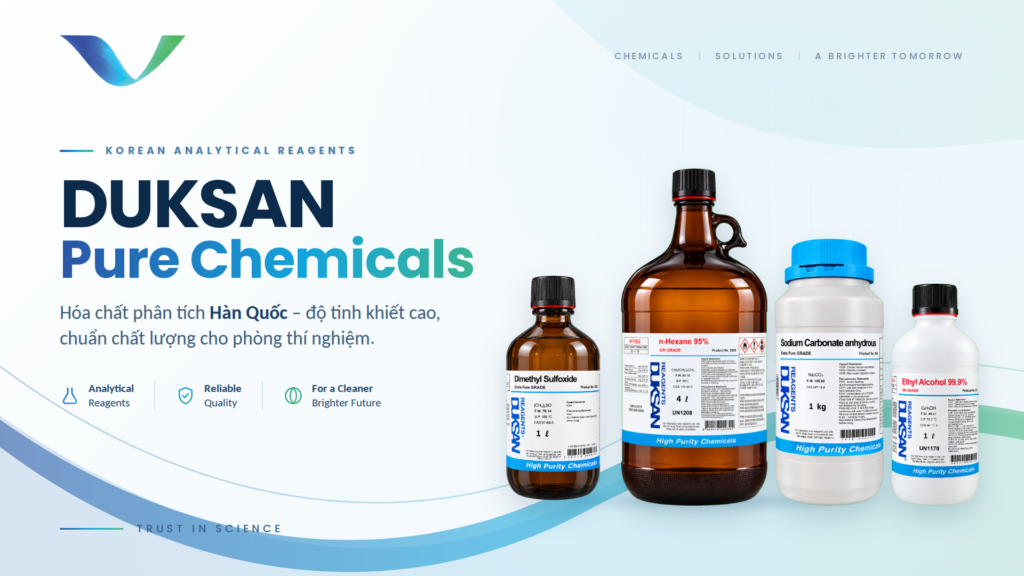
DUKSAN Pure Chemicals: Korean reagent maker since 1970, over 2,000 products. GR/EP/CP grades, six solvent grades, Product No., COA and SDS at QEMIX.
- Origin
- South Korea
- Founded
- 1970
- Purity grades
- GR · EP · CP
- Catalogue
- Analytical reagents · Solvents
- Codes at QEMIX
- 50
DUKSAN Pure Chemicals Co., Ltd. is a South Korean manufacturer of laboratory chemicals and reagents, in operation since 1970, supplying analytical reagents, organic reagents, high-purity solvents and bio reagents.
In Vietnam, QEMIX builds its DUKSAN range around what laboratories actually need: choosing the right grade, finding the right product number and having the COA, SDS and Specification in hand before ordering. This article summarises what you need to know about DUKSAN and how to send a request so QEMIX can confirm the exact product.
QEMIX is the Authorized Distributor of DUKSAN Pure Chemicals in Vietnam, importing directly from Korea with lot-specific COA/SDS and local stock.
Who is DUKSAN Pure Chemicals?
One of Korea’s longest-established domestic reagent manufacturers, replacing supply that once depended entirely on imports.
DUKSAN started in May 1970 as Samsung Chemicals Industrial, began producing high-purity chemicals in 1978 and started domestic reagent production in 1981. In 1986 the company was incorporated under its current name. Today DUKSAN operates its head office and plant in Ansan (Gyeonggi-do) and a third plant in Jincheon (Chungcheongbuk-do), with six business lines: analytical reagents, pharmaceutical raw materials, food additives, electronic chemicals, bio reagents and solvent recycling.
- 1991–1996Ansan plant completed and head office relocated there; HPLC-grade and pesticide-residue-grade solvents developed.
- 2000DNA Biosynthesis grade solvents developed and produced.
- 2001–2006ISO 9001 (2001), BGMP for pharmaceutical raw materials (2002), ISO 14001 (2006).
- 2003First company in Korea to manufacture Pesticide grade solvents.
- 2010Began exporting HPLC and Pesticide grade solvents.
- 2015–2017Authorized Economic Operator (AEO) certification; third plant in Jincheon completed.
- 2018Export sales reached USD 5 million; bio reagents launched.
- 3/2026Awarded the Silver Tower Order of Industrial Service Merit (Korea).
Four product groups that matter to laboratories in Vietnam
Analytical reagents
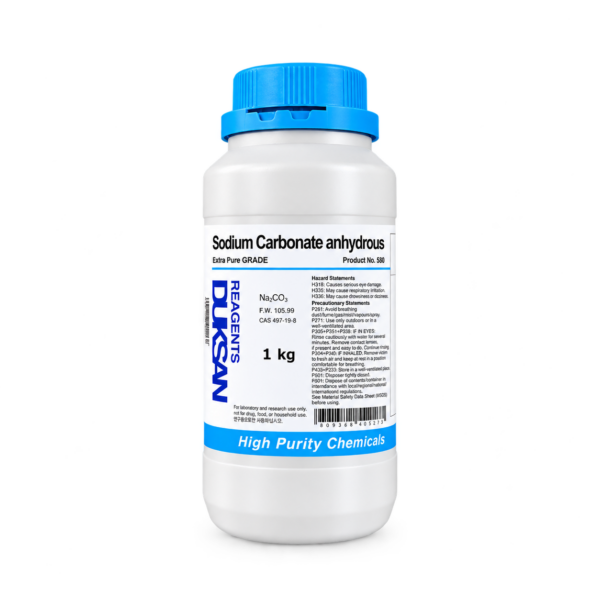
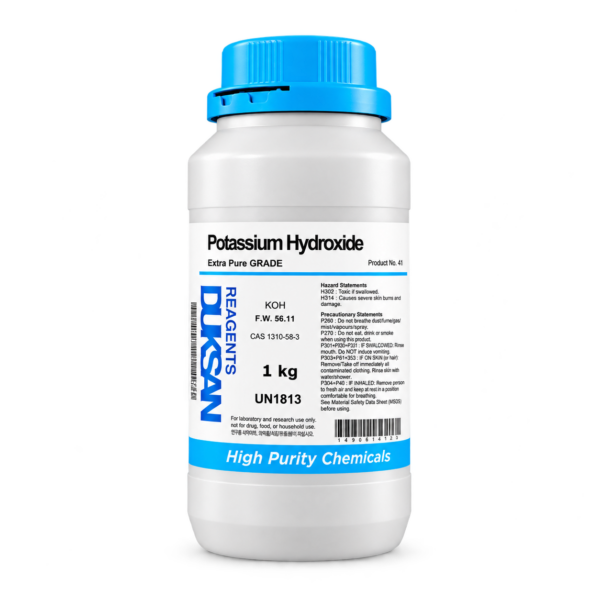
Acids, bases, inorganic salts, organic reagents and special-purpose reagents: volumetric solutions, buffer solutions, titration indicators, anhydrous titration reagents and Karl Fischer reagents. Sulfuric, hydrochloric, nitric, phosphoric and acetic acids; sodium and potassium hydroxide; ammonia — all available in several purity grades.
High-purity solvents
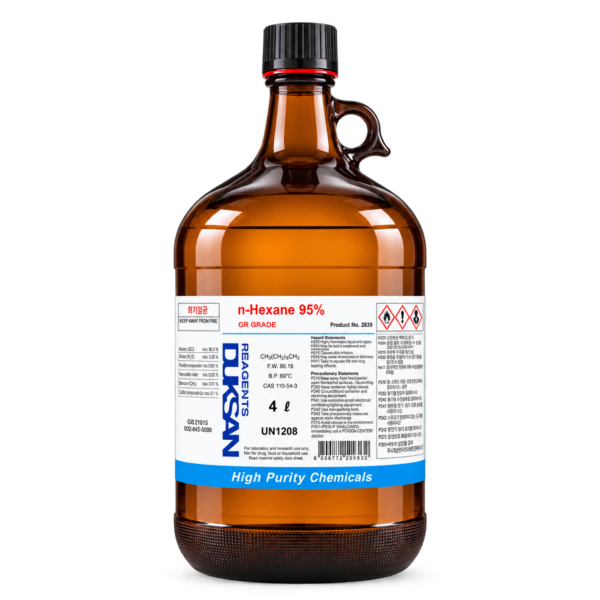
Acetone, acetonitrile, methanol, ethanol, isopropanol, ethyl acetate, diethyl ether, hexane, toluene — each in several grades from HPLC to LC-MS, classified by application. See section 04.
Acids, buffers and ion-pair reagents
Ammonium acetate, ammonium carbonate, ammonium phosphate, potassium phosphate, sodium acetate, sodium bicarbonate, phosphoric acid 85% and the alkylsulfonate sodium salts from pentane to dodecane for ion-pair chromatography.
Bio reagents
Reagents for molecular biology and electrophoresis.
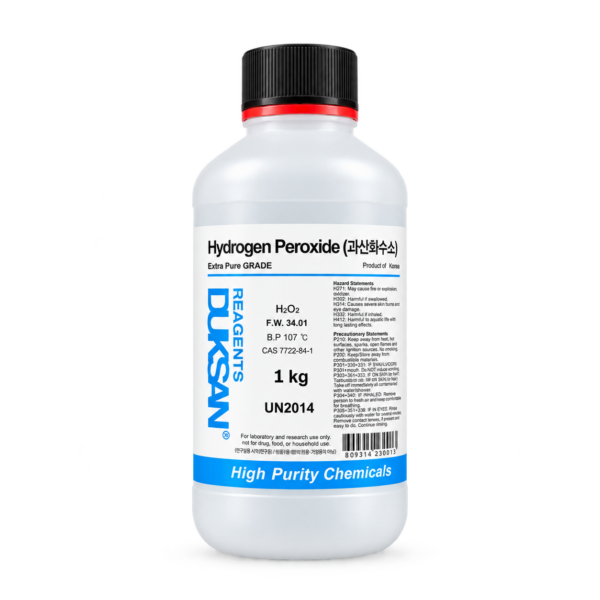
Understanding GR, EP and CP
A product name and concentration are not enough to identify a product. With DUKSAN, the grade is the first thing to check.
Analytical grade for testing and QC. Note: one manufacturer’s “GR” is not automatically equivalent to another’s “GR” or “ACS”. When considering a substitution, compare the Specification line by line — assay, water content, residue after evaporation, chloride, sulfate, heavy metals and the impurity limits specific to your method.
Suitable for preparing working solutions, routine laboratory procedures and some production uses that do not require specific impurity control.
For applications that need adequate purity without the requirements of instrumental analysis.
Compare Specification with Specification, or COA with COA — never grade name with grade name. QEMIX helps with this comparison before you decide to substitute a product.
DUKSAN’s six high-purity solvent grades
Each grade controls a different set of parameters. Summary according to the manufacturer’s published data.
| Grade | Controlled characteristics | Applications |
|---|---|---|
| LC-MS | No signals higher than 100 ppb reserpine; metals below 100 ppb; very low particles | LC-MS, HPLC |
| Ultimate | Highest quality, multi-purpose | HPLC (gradient), gas chromatography, environmental testing by GC-ECD/FID, spectrophotometry |
| Pesticide | Very low ECD-detectable residue | Pesticide residue analysis (GC-ECD), gas chromatography |
| HPLC | Low UV absorbance, low residue | HPLC (gradient), gas chromatography, spectrophotometry, experiments requiring ACS grade |
| DNA Biosynthesis | Minimal water content; low impurities (amines…) | Nucleic acid and peptide synthesis; anhydrous organic synthesis |
| Ultra Dry | Minimal water content | Water-sensitive reactions |
In LC-MS, even a very small amount of impurity in the solvent creates background signal or suppresses ionisation — so the “no signal above 100 ppb reserpine” specification is a figure worth comparing with other brands. In HPLC, the two parameters that decide your baseline are UV absorbance at the working wavelength and residue after evaporation.
Where are DUKSAN chemicals used?
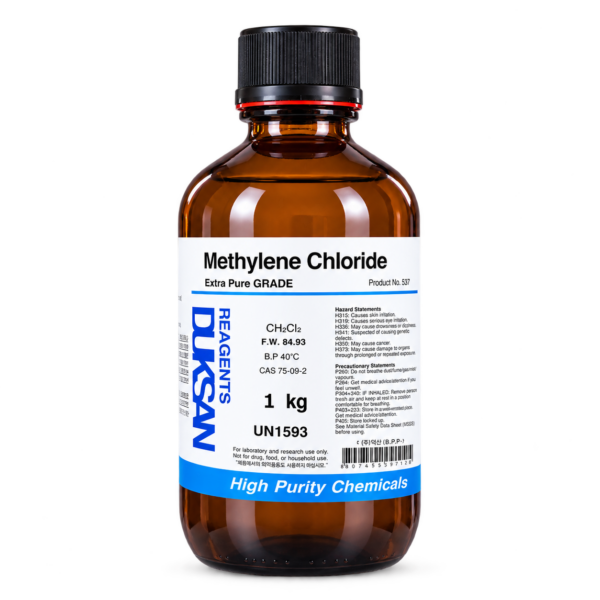
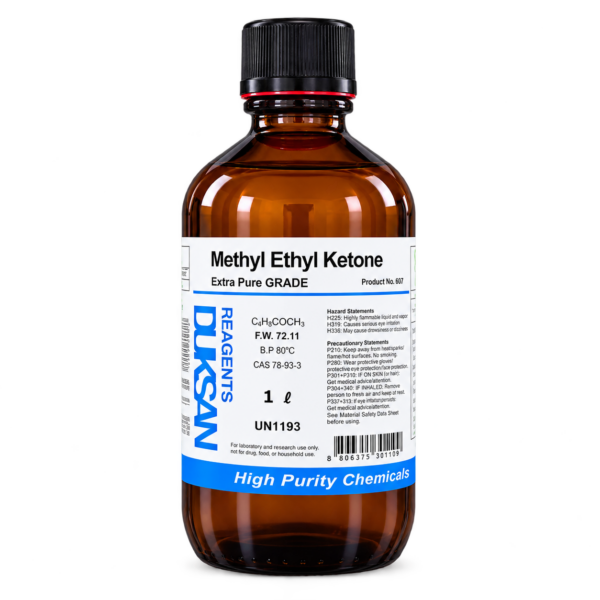
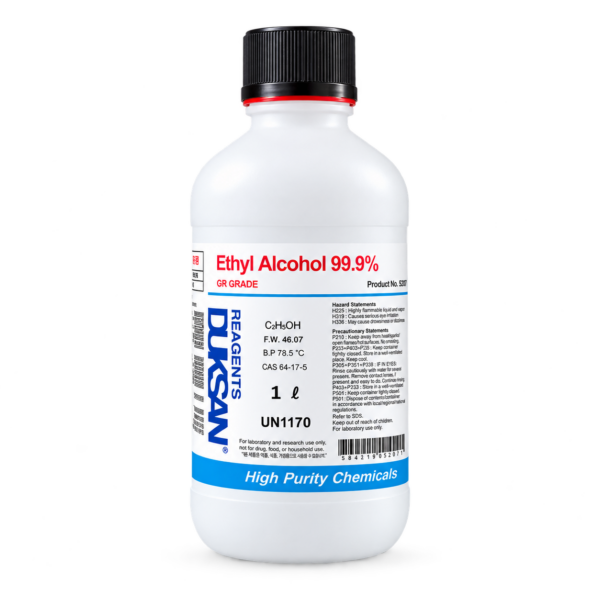
Pharmaceutical QC and R&D laboratories use acids, bases, solvents and buffer solutions for sample preparation, HPLC mobile phases and testing of raw materials and finished products. Food and environmental laboratories consume large volumes of acids and solvents for digestion, extraction and residue analysis — where the Pesticide and LC-MS grades earn their place. Universities and research institutes make use of the broad range, small pack sizes and multiple grades to match the quality level to each experiment.
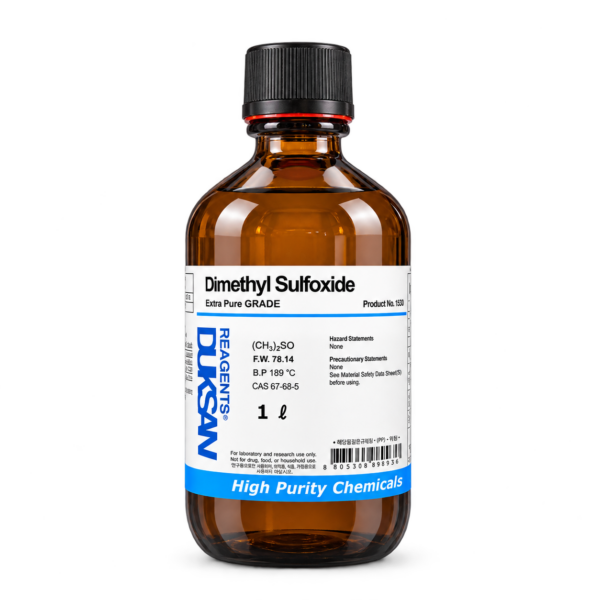
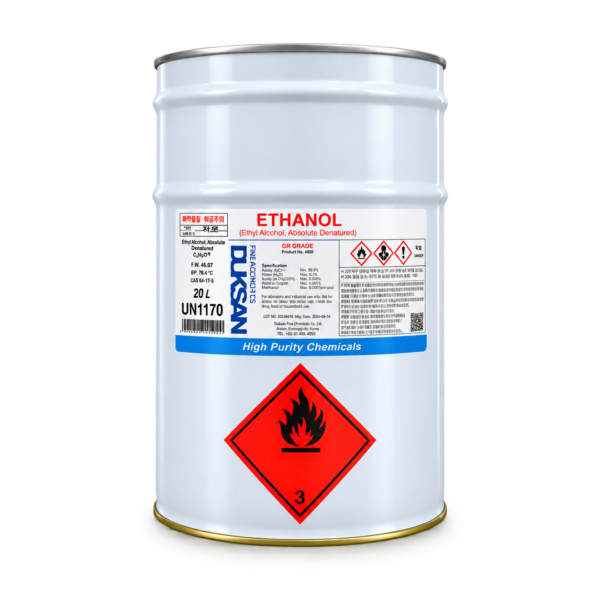
Product No. — the identifier that defines one product
Two chemicals with the same name and the same CAS number can still differ in grade, assay, impurity limits, pack size and application.
For example, “Sulfuric Acid 95%” exists as GR, EP or CP with different Specifications. This is why the DUKSAN Product No. should be used in quotation requests, purchase orders, test records and substitution files. When sending a request to QEMIX, use one of three formats:
- You have the code. DUKSAN Product No. + quantity.
- No code yet. Product name + CAS number + grade + pack size. Example: Sulfuric Acid, CAS 7664-93-9, GR, 1 L.
- Product not yet identified. Chemical name + application + analytical method — QEMIX proposes a suitable grade.
COA, SDS and Specification
DUKSAN publishes all three document types on its data portal, searchable by product name, CAS number or Product No. QEMIX supplies them in full with every shipment.
COA
Test results for one specific lot: lot number, assay, water content, impurities, residue and product-specific parameters.
SDS
Hazard classification, storage, protective equipment, first aid, transport, incident handling and disposal.
Specification
The technical parameters the product must meet — the basis for comparison when substituting between brands.
Looking for a DUKSAN chemical?
Send the Product No., CAS number or product name. QEMIX checks grade, pack size and stock and sends the COA/SDS/Specification — quick quotation, nationwide delivery, no minimum order quantity.
Source: DUKSAN Pure Chemicals Co., Ltd. — duksan.kr, Company › History and Company › Business, accessed September 2026; Silver Tower Order of Industrial Service Merit reported by Tax & Finance News (tfmedia.co.kr), March 2026.
Send the Product No. or the product name with its CAS Number. QEMIX helps you look up the Specification and SDS, and supplies the COA for the exact Lot No. once the batch information is confirmed.
See the DUKSAN catalogue