
Sep
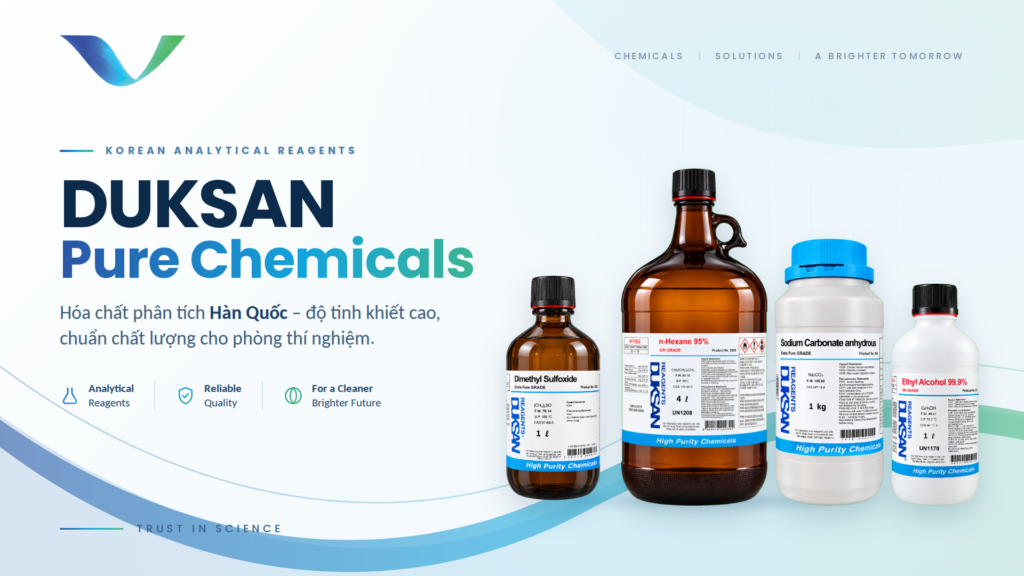
Which DUKSAN chemical fits which step: phosphate buffers for HPLC, acid and base for Kjeldahl, hexane for fat extraction, and the grade each test needs.
- Origin
- South Korea
- Founded
- 1970
- Purity grades
- GR · EP · CP
- Catalogue
- Analytical reagents · Solvents
- Codes at QEMIX
- 50
The same DUKSAN chemical may be used in a pharmaceutical QC laboratory, a food testing laboratory, an environmental monitoring laboratory and a university teaching laboratory — but each needs a different grade and a different pack size.
This article walks through the four most common user groups in Vietnam, showing which DUKSAN chemicals are typically used at which step of the workflow and which grade is sufficient. The product codes cited are items QEMIX distributes; click a product name to see its Specification, pack sizes and to request a quotation.
Choose the grade by the test, not by the industry
The industry only suggests which chemical groups are commonly used. The specific grade must be decided by the analytical method and the standard you apply.
Analytical grade: use when the result is reported, compared with a standard or kept in the quality record. Titration, sample preparation for instruments, preparation of secondary standard solutions.
General-purpose grade: working solutions, rinsing, crude extraction, qualitative tests, teaching practicals and steps that do not determine the accuracy of the final result.
Chromatographic mobile phases, sample dissolution for LC-MS, residue extraction: low UV absorbance, low residue, low background-producing impurities. See the six DUKSAN solvent grades in the DUKSAN introduction.
Pharmaceutical QC / R&D laboratories
Most pharmacopoeial tests are HPLC, titration and impurity limit tests. The three chemical groups used most are buffer salts, pH-adjusting acids and solvents.
Phosphate and acetate buffer salts
Potassium/sodium phosphate buffers are the most common buffer system for reversed-phase HPLC in the pH 2–8 range; ammonium acetate is volatile and suits LC-MS coupling. Available items: Potassium Phosphate monobasic, Sodium Phosphate dibasic anhydrous, Sodium Phosphate monobasic dihydrate, Ammonium Acetate, Sodium Acetate trihydrate.
Phosphoric acid, HCl, NaOH
Phosphoric acid 85% (GR) for mobile-phase pH adjustment; Hydrochloric acid 35–37% and Sodium Hydroxide pellets (GR) for titrant solutions and limit tests. For titration, record the actual assay from the COA to calculate concentration.
Mobile phase, sample dissolution, cleaning
Water for gradient (HPLC) for gradient mobile phases; n-Hexane HPLC for normal-phase chromatography; Iso-Propyl Alcohol and Acetone (GR) for dissolving samples and cleaning glassware and equipment.
Lot-specific COA and traceability
GMP requires traceability of the chemicals used in every test. Record the Product No. and lot number in the test record and keep the lot-specific COA — QEMIX supplies the COA issued by DUKSAN for the lot number on the packaging.
Food and feed testing laboratories
Proximate analyses (protein, fat, sugar, ash, moisture) consume large volumes of acids, bases and solvents; residue analysis needs higher-grade solvents.
H₂SO₄ – NaOH – boric acid
Digest with Sulfuric Acid 95%, alkalise and distil with Sodium Hydroxide, absorb the ammonia in Boric acid solution and titrate. Extra Pure is acceptable for the digestion step in routine work; titrant solutions should be prepared from GR chemicals.
Soxhlet extraction
Petroleum Ether 40–60 °C and n-Hexane are the two common crude-fat extraction solvents; Ethyl Ether is used in some fat-extraction procedures (e.g. the Röse-Gottlieb method for milk). After extraction, dry the extract with Sodium Sulfate anhydrous.
Starch, KI, vitamin C
Starch Soluble is the indicator for iodometric titration; Potassium Iodide is used in iodometry and in the peroxide value of fats and oils; L-Ascorbic Acid (GR) serves as a reference substance in vitamin C analysis; Sucrose is used to prepare sugar standard solutions.
Pesticide / HPLC grade solvents
Extraction and clean-up for pesticide residue analysis by GC-ECD need solvents with very low ECD-detectable residue — DUKSAN has a dedicated Pesticide grade for this purpose; for LC-MS/MS use the LC-MS grade. Contact QEMIX to order the correct grade for your method.
Environmental monitoring and analysis laboratories
Water, wastewater, soil and emission samples need a range of chemicals for sample preservation, digestion, extraction and drying.
Acids and oxidisers
Sulfuric Acid 95% for acidifying COD and oil-and-grease samples and for digestion; Hydrogen Peroxide 28% to assist oxidation of organic matter in metal digestions; Ammonia Water 25–30% for pH adjustment and in many colorimetric reagents.
n-Hexane, dichloromethane, ethyl acetate
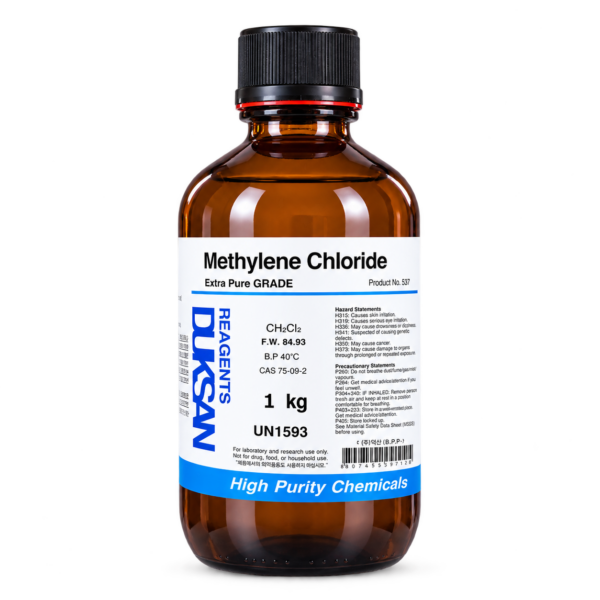
n-Hexane is the extraction solvent for oil and grease and hydrocarbons in water; Methylene Chloride and Ethyl Acetate (GR) extract semi-volatile organics. For analysis at µg/L levels, prefer Pesticide or HPLC grade solvents to avoid background signals.
Anhydrous Na₂SO₄ and silica gel
Sodium Sulfate anhydrous removes water from extracts before concentration; Silicagel Medium Granular (Blue) is the desiccant for desiccators and for protecting samples and instruments.
GR/EP inorganic salts
Sodium Chloride, Potassium Chloride, Potassium Sulfate, Magnesium Nitrate hexahydrate for conductivity standards, matrix solutions and reagents for electrochemical and colorimetric measurements.
Universities, colleges and training centres
Teaching laboratories need a broad range, moderate pack sizes and sensible prices; Extra Pure covers most practicals, while quantitative experiments use GR.
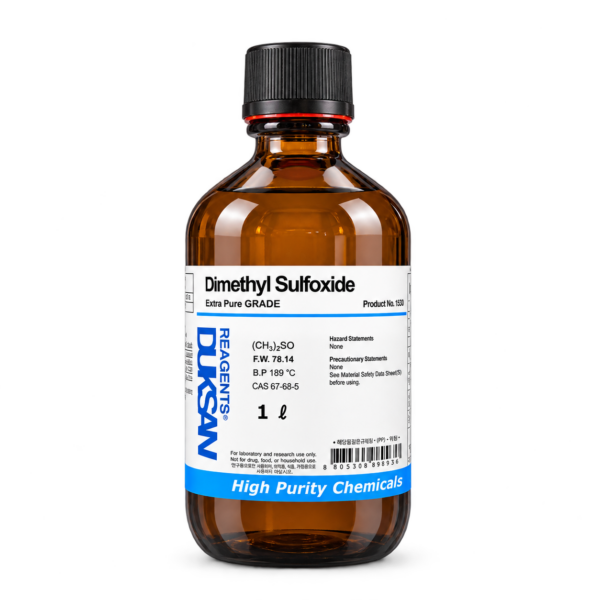
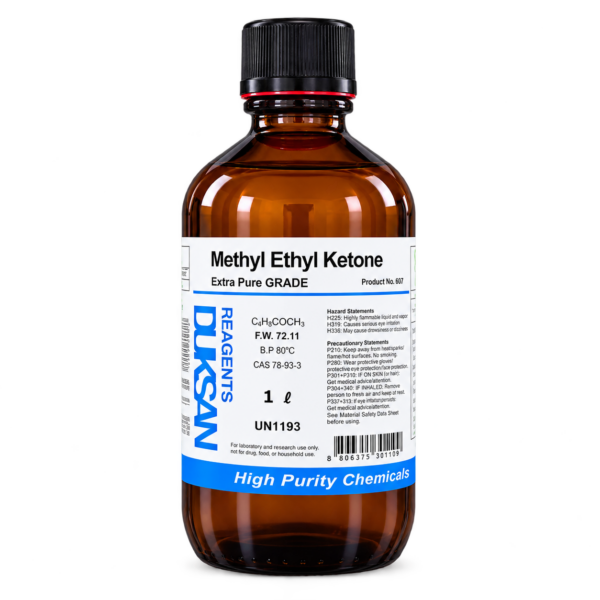
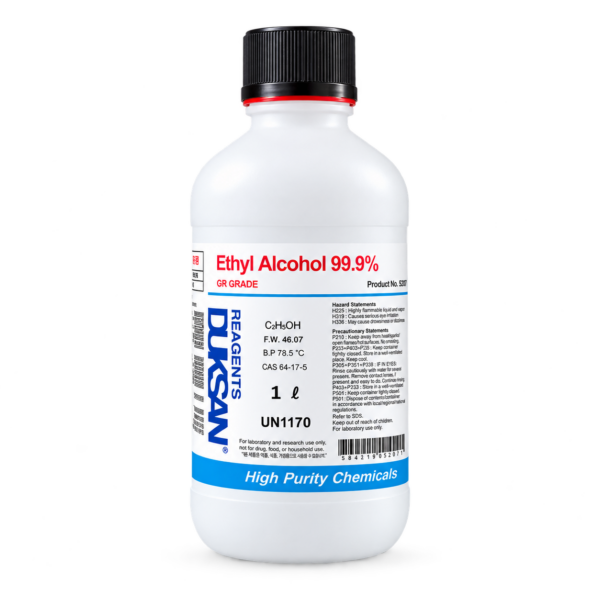
Items widely used in general, analytical and organic chemistry practicals: Sodium Chloride, Potassium Chloride, Sodium Carbonate anhydrous, Potassium Hydroxide, Sucrose, Starch Soluble, Glycerine, Ethyl Alcohol 99.5% (20 L pack for high consumption), Acetone, Dimethyl Sulfoxide, Methyl Ethyl Ketone, Sulfamic Acid and Sulfanilic Acid.
Flammable solvents (acetone, ethanol, hexane, ethyl ether), concentrated acids and solid bases should be kept in dedicated cabinets and issued per practical session. The SDS for each chemical — available on duksan.kr — should be printed and kept in the teaching laboratory; see how to read the 16 sections of an SDS.
DUKSAN chemicals by workflow step
| Step | Commonly used DUKSAN chemicals | Suggested grade |
|---|---|---|
| Sample preservation, digestion | Sulfuric Acid, Hydrochloric acid, Hydrogen Peroxide, Sodium Hydroxide | Extra Pure for routine work; GR for trace analysis |
| Extraction, clean-up | n-Hexane, Petroleum Ether, Methylene Chloride, Ethyl Acetate, Ethyl Ether, Sodium Sulfate anhydrous | GR; Pesticide/HPLC for residues |
| HPLC mobile phase, sample dissolution | Water for gradient, n-Hexane HPLC, phosphate/acetate buffer salts, Phosphoric acid | HPLC / LC-MS for solvents; GR for salts and acids |
| Titration, colorimetry | Sodium Hydroxide, Hydrochloric acid, Potassium Iodide, Starch Soluble, Boric acid, Ammonia Water | GR |
| Cleaning, practicals, matrix solutions | Acetone, Ethyl Alcohol, Iso-Propyl Alcohol, Sodium Chloride, Potassium Chloride, Sucrose, Glycerine | Extra Pure |
The table is a guide only. Where a method or standard specifies a chemical grade (for example “ACS reagent grade” or “HPLC grade”), compare DUKSAN’s Specification directly with that requirement — QEMIX helps with the comparison before quoting.
Send us your test — QEMIX proposes the chemical and grade
Tell us the method or standard you apply (TCVN, AOAC, USP, EPA…), your instrument and monthly consumption. QEMIX checks the Specification and stock and sends a quotation with the SDS as soon as possible.
References: DUKSAN Pure Chemicals Co., Ltd. — duksan.kr, COMPANY › Business (Analytical Reagent: GR/Extra Pure/CP grades and the six high-purity solvent grades), accessed September 2026. Applications are described according to the general principles of standard analytical methods (Kjeldahl, Soxhlet, iodometric titration, HPLC, solvent extraction); the specific chemical grade required must follow the method document in force at your laboratory.
Send the Product No. or the product name with its CAS Number. QEMIX helps you look up the Specification and SDS, and supplies the COA for the exact Lot No. once the batch information is confirmed.
See the DUKSAN catalogue